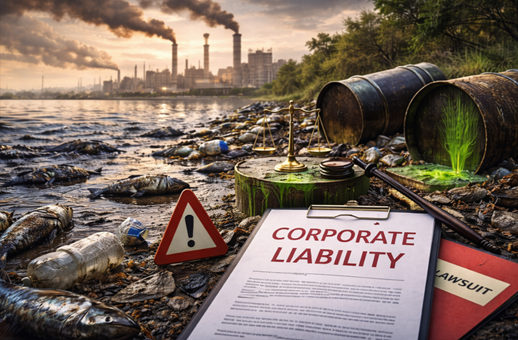
Corporate Liability for Environmental Damage – Legal Responsibilities, Risks, and Modern Business Accountability!
Introduction
Corporate Liability for Environmental Damage In today’s rapidly industrializing and environmentally conscious world, businesses are no longer judged solely by their profitability. Companies are increasingly held accountable for how their operations impact the environment. From oil spills and air pollution to hazardous waste disposal and deforestation, environmental harm caused by corporate activities can lead to serious legal, financial, and reputational consequences. This growing accountability is known as corporate liability for environmental damage.
Corporate Liability for Environmental Damage liability refers to the legal responsibility companies bear when their actions—or negligence—result in environmental harm. Governments, regulators, communities, and even investors now demand stronger environmental responsibility, making compliance not just a legal requirement but a critical business strategy. Corporate Liability for Environmental Damage article explores the concept of corporate environmental liability, its legal foundations, types, consequences, and how businesses can effectively manage environmental risks.
Understanding Corporate Liability for Environmental Damage
Corporate Liability for Environmental Damage a company’s operations cause harm to natural resources, ecosystems, or public health. This liability may occur through direct actions, such as releasing pollutants, or indirect actions, such as failing to prevent environmental risks within supply chains.
Environmental damage can include:
-
Water contamination from industrial waste
-
Air pollution caused by emissions
-
Soil degradation due to chemical leaks
-
Destruction of wildlife habitats
-
Improper disposal of hazardous materials
Modern environmental laws recognize that corporations, as legal entities, must bear responsibility for damages resulting from their activities. Liability ensures that companies cannot externalize environmental costs onto society while retaining profits.
Legal Foundations of Environmental Liability
Environmental liability laws are generally based on several legal principles designed to promote accountability and prevention.
1. The Polluter Pays Principle
One of the most widely accepted concepts in environmental law is the “polluter pays” principle. It requires companies responsible for pollution to cover the costs of cleanup, restoration, and compensation for affected communities. This principle discourages careless industrial practices by attaching financial consequences to environmental harm.
2. Strict Liability
In many jurisdictions, companies may be held liable even if they did not intend to cause harm. Under strict liability, proving environmental damage alone may be sufficient to establish responsibility. This approach is commonly applied to hazardous industries such as chemical manufacturing, mining, and oil extraction.
3. Negligence-Based Liability
If a company fails to exercise reasonable care in preventing environmental harm, it may face liability based on negligence. For example, ignoring safety inspections or failing to maintain equipment that later causes a chemical spill can result in legal penalties.
4. Absolute Liability
Some legal systems impose absolute liability for inherently dangerous activities. Under this framework, companies cannot escape responsibility by claiming lack of intent or compliance with minimum standards if damage occurs.
Types of Corporate Environmental Liability
Corporate liability for environmental damage can take multiple forms depending on the severity and nature of the violation.
Civil Liability
Civil liability involves compensation claims brought by governments, communities, or individuals affected by environmental damage. Companies may be required to:
-
Pay damages to affected residents
-
Restore damaged ecosystems
-
Fund environmental rehabilitation projects
Civil lawsuits can become extremely costly, especially when large populations or long-term ecological damage are involved.
Criminal Liability
Serious environmental violations may lead to criminal charges against corporations or company executives. Criminal liability typically applies when companies knowingly violate environmental regulations or act with reckless disregard for safety.
Penalties may include:
-
Heavy fines
-
Business restrictions
-
Imprisonment of responsible executives in severe cases
Administrative Liability
Regulatory agencies often impose administrative penalties such as fines, license suspensions, or operational shutdowns. These actions are designed to enforce compliance quickly without lengthy court proceedings.
Key Drivers Behind Increasing Corporate Accountability
Several global trends have strengthened corporate liability for environmental damage.
Rising Environmental Awareness
Public awareness about climate change, biodiversity loss, and pollution has increased dramatically. Consumers now favor environmentally responsible brands, pushing companies toward sustainable practices.
Stronger Regulations
Governments worldwide are introducing stricter environmental regulations, emissions standards, and reporting requirements. Companies must regularly monitor and disclose environmental performance.
Investor and ESG Pressure
Environmental, Social, and Governance (ESG) investing has transformed corporate priorities. Investors assess environmental risks before funding businesses, meaning poor environmental practices can reduce access to capital.
Global Supply Chain Responsibility
Corporations are increasingly held responsible not only for their own operations but also for environmental practices within their supply chains. Failure to monitor suppliers can result in legal and reputational consequences.
Consequences of Environmental Liability for Businesses
Environmental liability extends far beyond regulatory fines. The impact on businesses can be profound and long-lasting.
Financial Losses
Environmental cleanup costs can reach millions or even billions of dollars. Legal expenses, compensation claims, and operational disruptions significantly affect profitability.
Reputational Damage
Environmental scandals often attract widespread media attention. Negative public perception can lead to declining sales, investor withdrawal, and loss of partnerships.
Operational Restrictions
Authorities may suspend operations, revoke permits, or impose stricter monitoring requirements. This can disrupt production and reduce market competitiveness.
Long-Term Legal Exposure
Environmental damage may have delayed effects, meaning companies can face lawsuits years or decades after the incident occurred.
Corporate Responsibility and Risk Management Strategies
To avoid liability and promote sustainability, companies must adopt proactive environmental management systems.
Environmental Compliance Programs
Businesses should implement structured compliance programs that monitor adherence to environmental laws and regulations. Regular audits help identify risks before they escalate.
Environmental Impact Assessments (EIA)
Conducting environmental impact assessments before launching projects allows companies to evaluate potential environmental risks and adopt preventive measures.
Sustainable Operations
Reducing emissions, improving energy efficiency, and adopting cleaner technologies minimize environmental harm and legal exposure.
Employee Training and Awareness
Employees play a crucial role in environmental protection. Training programs ensure workers understand safety procedures, waste management practices, and emergency response protocols.
Supply Chain Monitoring
Companies should evaluate suppliers and contractors to ensure environmental standards are maintained throughout the production process.
The Role of Corporate Governance
Strong corporate governance is essential for managing environmental liability. Boards of directors increasingly oversee environmental risk management alongside financial performance.
Key governance practices include:
-
Establishing sustainability committees
-
Integrating environmental goals into business strategy
-
Transparent environmental reporting
-
Executive accountability for environmental performance
When environmental responsibility becomes part of leadership decision-making, companies are better equipped to prevent violations.
Emerging Trends in Environmental Liability
Corporate environmental liability continues to evolve as environmental challenges grow more complex.
Climate Change Litigation
Companies are increasingly facing lawsuits related to greenhouse gas emissions and climate impacts. Courts are beginning to recognize corporate responsibility in contributing to climate change.
Mandatory Sustainability Reporting
Many jurisdictions now require companies to disclose environmental data, emissions levels, and sustainability initiatives. Transparency increases accountability and helps regulators monitor compliance.
Technological Monitoring
Advanced technologies such as satellite monitoring, AI-based emissions tracking, and real-time pollution sensors allow authorities to detect violations more quickly.
Stakeholder Activism
Communities, environmental organizations, and shareholders are actively pursuing legal action against companies perceived as environmentally irresponsible.
Benefits of Responsible Environmental Practices
While compliance may seem costly, environmentally responsible business practices offer significant advantages:
-
Reduced legal risks and penalties
-
Improved brand reputation
-
Greater investor confidence
-
Operational efficiency through resource optimization
-
Long-term sustainability and resilience
Companies that prioritize environmental responsibility often gain competitive advantages in modern markets.
Conclusion
Corporate liability for environmental damage reflects a fundamental shift in how society views business responsibility. Companies are no longer isolated economic actors; they are accountable participants in environmental stewardship. Legal frameworks now ensure that businesses bear the consequences of environmental harm, encouraging prevention rather than reaction.
As environmental regulations tighten and public expectations rise, organizations must integrate sustainability into their core strategies. Proactive compliance, responsible governance, and sustainable innovation not only reduce liability risks but also strengthen long-term business success.
Ultimately, corporate environmental responsibility is no longer optional—it is a legal, ethical, and strategic necessity. Businesses that recognize this reality and act accordingly will be better positioned to thrive in an increasingly environmentally conscious global economy.