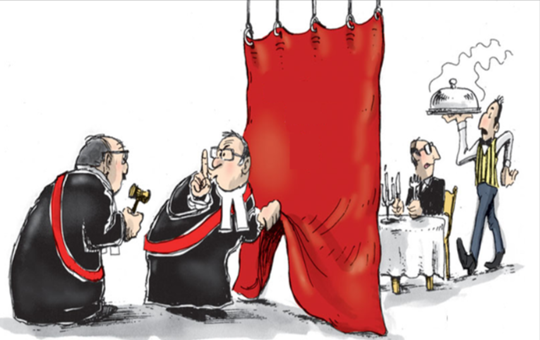
Piercing the Corporate Veil – Case Studies and Legal Lessons for Modern Businesses!
Introduction
Piercing the Corporate Veil One of the most fundamental principles of corporate law is the concept of separate legal personality, which treats a company as an independent legal entity distinct from its shareholders and directors. This legal separation protects individuals from personal liability for corporate debts and obligations. However, courts sometimes set aside this protection in exceptional circumstances — a process known as piercing the corporate veil.
Piercing the Corporate Veil occurs when courts disregard the company’s separate legal identity and hold the individuals behind it personally responsible. This doctrine exists to prevent misuse of corporate structures for fraud, evasion of legal duties, or unfair conduct.
In this article, we explore the meaning, Piercing the Corporate Veil legal foundations, and real-world importance of piercing the corporate veil through major case studies that shaped corporate law across jurisdictions.
Understanding the Corporate Veil
Piercing the Corporate Veil “corporate veil” refers to the legal barrier separating a company from its owners. Once incorporated, a business gains rights similar to a person: it can own property, enter contracts, sue, and be sued.
The advantages of this system include:
-
Limited liability for shareholders
-
Encouragement of entrepreneurship and investment
-
Business continuity beyond individual ownership
However, courts recognize that this protection can be abused. When individuals use a company merely as a façade to commit wrongdoing, judges may intervene and lift or pierce the veil.
Legal Grounds for Piercing the Corporate Veil
Although rules vary by jurisdiction, courts typically pierce the corporate veil under specific conditions:
-
Fraud or dishonest conduct
-
Evasion of legal obligations
-
Sham or façade companies
-
Agency relationships
-
Undercapitalization or misuse of corporate assets
Courts apply this remedy cautiously because removing limited liability can undermine business confidence. Therefore, veil piercing remains rare and highly fact-specific.
Case Study 1: Salomon v Salomon & Co Ltd — The Foundation of Corporate Personality
The landmark case involving A. Salomon & Co. Ltd. established the principle that companies possess independent legal identity.
Background
In 1897, Aron Salomon formed a company to run his boot manufacturing business. He owned most shares while family members held nominal stakes. When the company later became insolvent, creditors argued that Salomon should personally pay company debts because the business was essentially his alter ego.
Court Decision
The House of Lords ruled in favor of Salomon, affirming that once legally incorporated, a company is separate from its shareholders — even if one person effectively controls it.
Legal Impact
This decision reinforced limited liability and corporate independence. Importantly, it also created the foundation upon which later veil-piercing doctrines were built. Courts would only depart from this principle in exceptional cases involving abuse.
Case Study 2: Gilford Motor Co Ltd v Horne — Preventing Legal Evasion
A classic example of veil piercing occurred in a dispute involving Gilford Motor Co Ltd.
Background
Mr. Horne, a former employee, was bound by a non-compete agreement preventing him from soliciting customers after leaving the company. To bypass this restriction, he created a new company under his wife’s name and used it to attract Gilford’s clients.
Court Decision
The court determined that the new company was merely a sham established to avoid contractual obligations. Judges pierced the corporate veil and issued an injunction against both Horne and the company.
Legal Significance
This case demonstrates that courts will not allow incorporation to be used as a tool for evading existing legal duties. When a company exists solely to disguise improper conduct, its separate identity may be ignored.
Case Study 3: Prest v Petrodel Resources Ltd — Modern Clarification
A more recent and influential ruling involved Petrodel Resources Ltd, providing clarity on when veil piercing is appropriate.
Background
During divorce proceedings, a spouse claimed that properties owned by companies controlled by her husband were actually his personal assets. The issue before the court was whether the corporate veil could be pierced to transfer ownership.
Court Decision
The UK Supreme Court clarified that veil piercing applies only when a company is deliberately used to evade or frustrate legal obligations. Instead of piercing the veil broadly, the court relied on property and trust law principles to resolve the dispute.
Legal Importance
The judgment narrowed the doctrine’s scope and emphasized that veil piercing is a last resort, not a routine legal solution. Courts prefer alternative legal remedies whenever possible.
Case Study 4: Corporate Abuse and the Enron Scandal
Corporate veil discussions are not limited to contract disputes — they also arise in major corporate scandals. The collapse of Enron Corporation in 2001 illustrates how complex corporate structures can conceal wrongdoing.
Background
Enron used numerous subsidiary entities and accounting mechanisms to hide massive debts and inflate profits. Executives manipulated corporate structures to mislead investors and regulators.
Legal Consequences
Although courts did not formally “pierce the veil” in the traditional sense, investigations revealed how corporate entities were used as instruments of fraud. Executives faced personal criminal liability, demonstrating that corporate protection cannot shield intentional misconduct.
Lessons Learned
The Enron scandal prompted stricter governance rules, including enhanced disclosure standards and accountability requirements for executives worldwide.
Case Study 5: WorldCom and Director Liability
Another major example involves WorldCom, which collapsed after accounting fraud exceeding billions of dollars.
Background
Senior management manipulated financial statements to conceal losses and maintain stock prices. Investors suffered enormous damages when the fraud was exposed.
Legal Outcome
Courts held executives personally accountable, reinforcing the principle that individuals cannot rely on corporate structures to escape responsibility for intentional wrongdoing.
Broader Impact
The scandal strengthened regulatory oversight and highlighted the importance of ethical corporate governance.
Key Factors Courts Consider
From these case studies, several patterns emerge. Courts typically evaluate:
-
Control and domination: Did individuals completely control the company?
-
Improper purpose: Was the company used to commit wrongdoing?
-
Economic reality: Did the company operate independently?
-
Intent to evade law: Was incorporation used strategically to avoid liability?
No single factor guarantees veil piercing; courts assess the total circumstances.
Why Veil Piercing Matters Today
In modern economies, corporations range from small startups to multinational enterprises. The doctrine remains relevant because:
-
It deters fraudulent business practices
-
Protects creditors and consumers
-
Encourages responsible corporate governance
-
Maintains trust in commercial systems
At the same time, courts must balance accountability with economic stability. Overuse of veil piercing could discourage entrepreneurship by exposing investors to excessive risk.
Practical Lessons for Business Owners
Business leaders can reduce the risk of veil piercing by following best practices:
-
Maintain corporate formalities (separate accounts, meetings, records)
-
Avoid mixing personal and company assets
-
Ensure adequate capitalization
-
Act transparently and ethically
-
Comply with contractual and statutory obligations
Companies that operate genuinely and independently are rarely subject to veil piercing.
Conclusion
Piercing the corporate veil represents one of the most powerful — yet carefully controlled — tools available to courts in corporate law. While the doctrine challenges the principle of limited liability, it exists to prevent injustice and abuse.
From the foundational ruling in Salomon’s case to modern disputes and global corporate scandals, legal history shows that courts respect corporate personality but refuse to allow it to become a shield for fraud or evasion.
Ultimately, the lesson from these case studies is clear: incorporation provides protection, not immunity. Businesses that respect legal boundaries benefit from limited liability, while those that misuse corporate structures risk losing the very protection they seek.
As corporate structures continue evolving in a globalized economy, piercing the corporate veil remains an essential safeguard — ensuring that fairness, accountability, and justice prevail over technical legal formality.