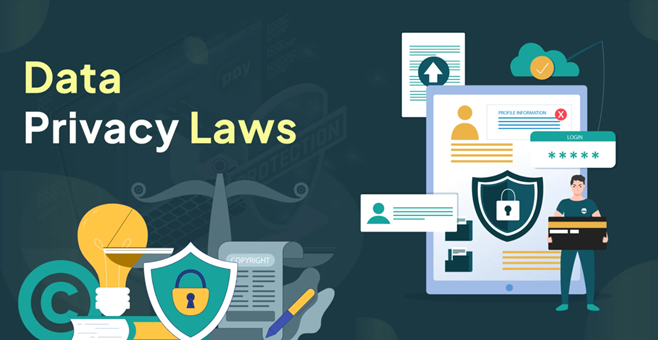
Understanding Data Protection and Privacy Laws – Safeguarding Personal Information in the Digital Age
Introduction
Data Protection and Privacy Laws In today’s hyper-connected digital world, personal data has become one of the most valuable resources. From online shopping and social media interactions to banking and healthcare services, individuals share vast amounts of personal information every day. While this data enables convenience, innovation, and personalized services, it also raises serious concerns about misuse, unauthorized access, and privacy violations. This is where Data Protection and Privacy Laws play a crucial role. These laws are designed to safeguard personal information, ensure responsible data handling, and protect individuals’ fundamental rights in an increasingly digital society.
What Are Data Protection and Privacy Laws?
Data Protection and Privacy Laws are legal frameworks that regulate how personal data is collected, stored, processed, shared, and disposed of. Their primary purpose is to ensure that organizations handle personal information in a lawful, transparent, and secure manner. These laws grant individuals rights over their data and impose obligations on businesses, governments, and institutions that process personal information.
Although the terms “data protection” and “privacy” are often used interchangeably, they have distinct meanings. Privacy laws focus on an individual’s right to control personal information and maintain confidentiality, while Data Protection and Privacy Laws emphasize the technical and organizational measures required to secure data from breaches, misuse, or loss. Together, they form a comprehensive system for protecting personal information.
Why Data Protection and Privacy Laws Matter
The importance of data protection and privacy laws has grown rapidly due to several factors:
-
Rising Data Breaches: Cyberattacks and data leaks expose sensitive information such as financial details, medical records, and personal identifiers, causing financial loss and reputational damage.
-
Increased Digital Footprint: People now generate data through smartphones, apps, wearables, and smart devices, often without realizing the extent of data collection.
-
Consumer Trust: Strong data protection laws build trust between consumers and organizations by ensuring transparency and accountability.
-
Ethical Responsibility: Protecting personal data is not just a legal obligation but also an ethical duty in respecting individual autonomy and dignity.
Key Principles of Data Protection Laws
Most data protection and privacy regulations across Data Protection and Privacy Laws world are based on a set of common principles. These principles guide organizations in handling personal data responsibly:
-
Lawfulness, Fairness, and Transparency: Data must be collected and processed legally, fairly, and with clear communication to individuals.
-
Purpose Limitation: Data should only be collected for specific, legitimate purposes and not used beyond those purposes.
-
Data Minimization: Only the minimum amount of data necessary should be collected.
-
Accuracy: Personal data must be accurate and kept up to date.
-
Storage Limitation: Data should not be retained longer than necessary.
-
Integrity and Confidentiality: Appropriate security measures must protect data from unauthorized access or loss.
-
Accountability: Organizations must demonstrate compliance with data protection obligations.
Major Data Protection and Privacy Laws Around the World
Different countries have enacted their own data protection frameworks, reflecting cultural, legal, and economic priorities. Some of the most influential laws include:
General Data Protection Regulation (GDPR)
The GDPR, implemented by the European Union, is one of the most comprehensive data protection laws globally. It applies not only to EU-based organizations but also to any entity processing the data of EU residents. GDPR grants individuals rights such as data access, rectification, erasure (right to be forgotten), and data portability. It also imposes strict penalties for non-compliance, making it a global benchmark for privacy regulations.
California Consumer Privacy Act (CCPA)
The CCPA enhances privacy rights for California residents. It allows individuals to know what personal data is collected, request deletion, and opt out of data selling. The law emphasizes transparency and consumer control, influencing similar legislation in other U.S. states.
Data Protection Laws in India
India has been strengthening its data protection framework to address growing digital adoption. The Digital Personal Data Protection Act focuses on consent-based data processing, data security, and accountability of data fiduciaries. It aims to balance innovation with privacy rights while aligning with global standards.
Other Global Regulations
Countries like Brazil (LGPD), Canada (PIPEDA), Australia (Privacy Act), and Japan (APPI) have also implemented robust data protection laws, highlighting the global consensus on the importance of privacy.
Rights of Individuals Under Privacy Laws
One of the most significant aspects of data protection and privacy laws is the empowerment of individuals. Common rights include:
-
Right to Access: Individuals can request information about what data is held about them.
-
Right to Correction: Incorrect or outdated data can be corrected.
-
Right to Erasure: Under certain conditions, individuals can request deletion of their data.
-
Right to Restrict Processing: Data use can be limited in specific situations.
-
Right to Data Portability: Individuals can obtain their data in a usable format.
-
Right to Object: Individuals can object to certain types of data processing, such as direct marketing.
Obligations of Organizations
Organizations that collect or process personal data must comply with several responsibilities:
-
Implement strong cybersecurity and data protection measures
-
Obtain clear and informed consent from users
-
Maintain detailed records of data processing activities
-
Report data breaches within prescribed timelines
-
Conduct data protection impact assessments when required
-
Appoint data protection officers in certain cases
Failure to comply can result in heavy fines, legal action, and reputational damage.
Challenges in Implementing Data Protection Laws
Despite their importance, implementing data protection and privacy laws presents challenges:
-
Complex Compliance Requirements: Organizations operating across multiple jurisdictions must comply with different regulations.
-
Rapid Technological Change: Emerging technologies like artificial intelligence, big data, and IoT raise new privacy concerns.
-
Lack of Awareness: Many individuals and small businesses are still unaware of their rights and obligations.
-
Balancing Innovation and Privacy: Regulators must ensure that privacy laws do not stifle technological growth.
The Future of Data Protection and Privacy
As digital transformation continues, data protection and privacy laws will evolve to address new risks and opportunities. Future trends may include stronger enforcement, global harmonization of privacy standards, increased focus on ethical data use, and enhanced user control over personal information. Organizations that proactively adopt privacy-by-design and transparency will be better positioned to succeed in this environment.
Conclusion
Data protection and privacy laws are essential pillars of the modern digital economy. They protect individuals from data misuse, promote trust, and encourage responsible innovation. For organizations, compliance is no longer optional—it is a fundamental requirement for long-term success. For individuals, understanding these laws empowers them to take control of their personal information. As data continues to shape our world, strong and effective privacy laws will remain vital in safeguarding digital rights and freedoms.