WTO Agreements and Their Impact on Business – A Complete Guide to Global Trade Rules!
Understanding the World Trade Organization
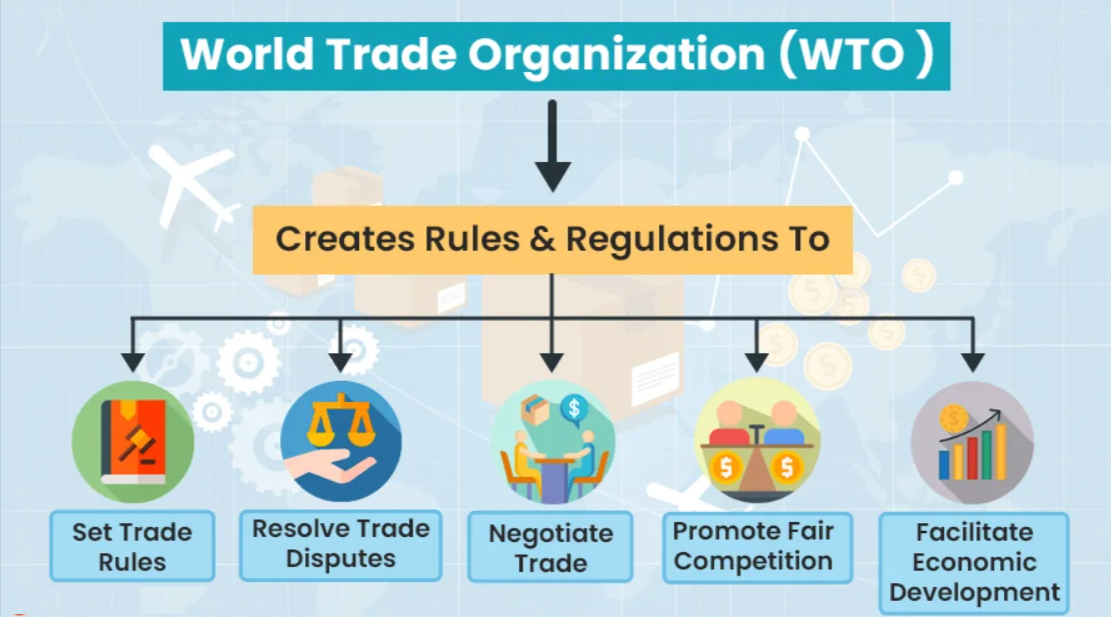
WTO Agreements and Their Impact on Business International trade is like a massive highway system connecting countries through the exchange of goods and services. Without clear rules, that highway would quickly turn into chaos—traffic jams, unfair advantages, and economic disputes everywhere. This is where the World Trade Organization (WTO) plays a critical role. The WTO is the global institution responsible for regulating trade between nations and ensuring that international trade flows smoothly, predictably, and fairly.
The organization was established in 1995 as the successor to WTO Agreements and Their Impact on Business General Agreement on Tariffs and Trade (GATT). Today, it includes over 160 member countries that collectively account for the majority of global trade. The WTO works by creating agreements that member nations must follow when conducting international trade. These agreements cover everything from tariffs and intellectual property to services and agriculture.
WTO Agreements and Their Impact on Business, WTO agreements are not just abstract legal frameworks—they directly affect everyday operations. When a company exports products, opens overseas offices, or invests in another country, WTO rules influence tariffs, market access, and regulatory standards. For example, the organization maintains extensive databases tracking tariff commitments and trade policies across more than 150 economies, providing businesses with transparency about import duties and trade regulations.
Think of WTO agreements as the rulebook of global commerce. WTO Agreements and Their Impact on Business They create stability, reduce uncertainty, and allow companies to plan long-term investments in international markets. Without these agreements, businesses would face unpredictable regulations and potentially massive barriers to global expansion.
Overview of Major WTO Agreements
WTO agreements form the backbone of international trade law. Each agreement focuses on a specific area of trade, but together they create a comprehensive framework that governs how countries interact economically. Understanding these agreements helps businesses navigate the complex world of international commerce.
General Agreement on Tariffs and Trade (GATT)
The General Agreement on Tariffs and Trade (GATT) is one of the most fundamental WTO agreements. Originally introduced in 1947, it focuses on reducing tariffs and other trade barriers for goods. The main goal is to encourage free trade by lowering import duties and eliminating discriminatory trade practices.
For businesses, GATT has played a crucial role in expanding global markets. Lower tariffs mean that companies can export products more competitively. Over the decades, negotiations under the GATT and WTO frameworks have significantly reduced average tariffs worldwide, making cross-border trade more accessible for businesses of all sizes.
Tariff commitments negotiated through WTO systems can reduce global tariff costs by billions of dollars annually. According to economic research, updating tariff commitments could potentially cut annual tariff costs by around $26.4 billion globally, showing how impactful these agreements can be for international businesses.
General Agreement on Trade in Services (GATS)
The General Agreement on Trade in Services (GATS) governs international trade in services rather than physical goods. This includes industries such as banking, telecommunications, tourism, education, and professional services.
Before GATS, services were largely excluded from international trade agreements. However, the global economy has shifted dramatically toward service industries. Today, services account for a large portion of international business activities.
Under GATS, member countries commit to opening specific service sectors to foreign competition. For example, a country may allow foreign banks to operate within its financial system or permit international telecommunications companies to provide services domestically. For businesses, this means greater opportunities to expand internationally without facing excessive restrictions.
Trade-Related Aspects of Intellectual Property Rights (TRIPS)
The TRIPS agreement focuses on protecting intellectual property rights across borders. This includes patents, copyrights, trademarks, and trade secrets.
Imagine a technology company investing millions of dollars in research and development. Without international protection, competitors in other countries could copy the technology without consequences. TRIPS prevents this by establishing minimum standards for intellectual property protection among WTO members.
For businesses in sectors like pharmaceuticals, software, and entertainment, TRIPS is incredibly important. It ensures that innovation is rewarded and that companies can operate globally without constantly worrying about intellectual property theft.
Trade-Related Investment Measures (TRIMS)
The TRIMS agreement regulates investment measures that could distort international trade. Some countries historically required foreign companies to meet certain conditions, such as using a specific percentage of locally produced materials.
TRIMS aims to eliminate these restrictions because they can create unfair trade advantages. By removing such requirements, the agreement allows companies to invest in foreign markets without unnecessary limitations.
For multinational corporations, TRIMS creates a more predictable investment environment. Businesses can establish operations abroad knowing that governments cannot impose trade-distorting conditions that violate WTO rules.
Agreement on Agriculture and Market Access
Agriculture has always been a sensitive area in international trade. Governments often protect domestic farmers through subsidies and import restrictions, which can distort global markets. The Agreement on Agriculture (AoA) was created to bring more transparency and fairness to agricultural trade.
The agreement focuses on three main pillars: reducing agricultural subsidies, improving market access, and regulating export competition. For businesses involved in food production, retail, and agribusiness, these rules are extremely important.
Food exporters benefit when tariffs and quotas are reduced because it becomes easier to sell products internationally. For example, global trade policies related to tariffs and agricultural market access are monitored through WTO data systems that track applied duties and trade commitments across member countries.
Retail businesses also benefit because lower trade barriers increase product variety and reduce costs. Consumers ultimately gain access to a wider selection of goods at more competitive prices.
Trade Facilitation Agreement (TFA)
One of the most modern WTO agreements is the Trade Facilitation Agreement (TFA). Its main objective is to simplify customs procedures and make international trade faster and more efficient.
If you have ever ordered a product from overseas, you probably understand how complicated customs processes can be. Delays at borders, excessive paperwork, and inconsistent regulations can significantly increase trade costs.
The TFA addresses these issues by encouraging countries to modernize customs systems, reduce bureaucracy, and improve transparency. Businesses benefit because shipments move across borders more quickly and with fewer administrative hurdles.
Experts estimate that improvements in trade facilitation could save businesses billions of dollars each year by reducing delays and administrative costs. For companies that rely on global supply chains, these improvements can dramatically increase efficiency.
Key Principles Behind WTO Agreements
WTO agreements are built on a few fundamental principles that guide international trade. Two of the most important are Most Favored Nation (MFN) and National Treatment.
Most Favored Nation Principle
The MFN principle requires countries to treat all WTO members equally. If a country reduces tariffs for one trading partner, it must apply the same reduction to all other WTO members.
For businesses, this principle ensures fairness. Companies exporting products to a foreign market know they will not face discriminatory tariffs compared to competitors from other countries.
National Treatment Principle
The National Treatment principle states that imported goods must be treated the same as domestically produced goods once they enter the market.
This rule prevents countries from imposing hidden barriers that disadvantage foreign businesses. For example, a government cannot apply stricter regulations or higher taxes to imported products than it does to local products.
Together, these principles create a level playing field for businesses engaged in international trade.
Impact of WTO Agreements on International Business
Expansion of Global Markets
Perhaps the biggest impact of WTO agreements is the expansion of global markets. By reducing trade barriers, companies can reach customers in dozens or even hundreds of countries.
This increased market access allows businesses to scale production, reduce costs, and grow more rapidly. Small and medium-sized enterprises benefit as well because they can enter international markets that were previously inaccessible.
Reduction of Tariffs and Trade Barriers
Tariffs are essentially taxes on imports, and they can significantly increase the price of foreign goods. WTO agreements aim to reduce these tariffs and make trade more affordable.
Lower tariffs allow businesses to export products more competitively. They also enable companies to source raw materials and components from other countries at lower costs.
However, rising protectionism can still affect trade. For instance, trade tensions and tariffs could lead to a 1% contraction in global merchandise trade volumes, highlighting how sensitive international business is to trade policies.
Protection of Intellectual Property
WTO agreements like TRIPS protect intellectual property rights across borders. This protection encourages companies to invest in research and innovation because they know their inventions will be legally protected.
For industries such as pharmaceuticals, software, and entertainment, this protection is essential for maintaining competitive advantages.
Increased Competition
While WTO agreements create opportunities, they also increase competition. When markets open to international trade, domestic companies must compete with foreign businesses.
This competition can push companies to innovate, improve efficiency, and reduce prices. While some industries may struggle initially, the overall effect is usually increased productivity and economic growth.
Challenges Businesses Face Under WTO Rules
Compliance and Regulatory Complexity
Even though WTO agreements simplify trade rules, international business remains complex. Companies must comply with customs regulations, product standards, and legal requirements in multiple countries.
For smaller businesses, navigating these regulations can be challenging. They may need specialized legal or trade expertise to ensure compliance.
Trade Disputes and Economic Conflicts
Another challenge is trade disputes between countries. When nations disagree over trade policies, they may impose tariffs or restrictions that affect businesses.
Trade conflicts can disrupt supply chains, increase costs, and create uncertainty for companies operating internationally.
Future of WTO Agreements and Global Business
The global economy is constantly evolving, and WTO agreements must adapt to new realities. Emerging technologies, digital trade, and artificial intelligence are transforming international commerce.
According to economic projections, technologies like artificial intelligence could boost global trade by around 34–37% by 2040, demonstrating how digital innovation may reshape international business in the coming decades.
To remain effective, the WTO will likely need to update its agreements to address digital trade, data flows, and emerging industries. Businesses that understand and adapt to these changes will be better positioned to succeed in the global marketplace.
Conclusion
WTO agreements play a vital role in shaping the modern global economy. By establishing clear rules for international trade, these agreements create a stable environment where businesses can expand beyond national borders. From reducing tariffs to protecting intellectual property and simplifying customs procedures, the WTO framework supports economic growth and international cooperation.
For businesses, understanding WTO agreements is not just an academic exercise—it is a practical necessity. These rules determine market access, investment opportunities, and competitive dynamics in the global marketplace. Companies that understand the WTO system can better navigate international trade, manage risks, and take advantage of opportunities in the rapidly evolving world economy.
FAQs
1. What are WTO agreements?
WTO agreements are international treaties negotiated by member countries to regulate global trade. They cover areas such as goods, services, intellectual property, and investment.
2. Why are WTO agreements important for businesses?
They reduce trade barriers, create predictable rules, and ensure fair competition, making it easier for companies to operate internationally.
3. What is the most important WTO agreement?
The General Agreement on Tariffs and Trade (GATT) is considered one of the most important because it focuses on reducing tariffs and promoting free trade in goods.
4. How do WTO agreements reduce tariffs?
Member countries negotiate tariff reductions during trade rounds and commit to maximum tariff levels, which must be applied equally to all WTO members.
5. Do WTO agreements benefit small businesses?
Yes. By lowering trade barriers and increasing transparency, WTO agreements allow small and medium-sized enterprises to access international markets more easily.